

CURRENTLY READING
The Piano Shop On The Left Bank by Thad Carhart
Monday, January 19 through Thursday, February 5, 2026
Read by Jim Fleming
Walking his two young children to school every morning, Thad Carhart passes an unassuming little storefront in his Paris neighborhood. Intrigued by its simple sign—Desforges Pianos—he enters, only to have his way barred by the shop’s imperious owner. Unable to stifle his curiosity, he finally lands the proper introduction, and a world previously hidden is brought into view. The Piano Shop on the Left Bank is at once a beguiling portrait of a Paris not found on any map and a tender account of the awakening of a lost childhood passion.
(Random House; ISBN-10: 0375503048)
THEME: John Bayless, piano: “Musetta’s Waltz” from Puccini’s “La Boheme” from The Puccini Album: arias for piano (Angel CDC 54801)
Readings are archived for one week following the broadcast day of the last chapter due to publisher copyright restrictions.
Latest Episodes
-
The Piano Shop On The Left Bank 7 of 14 – Piano Lessons
After Thad buys the Stingl piano, he soon doubts his abilities as a pianist. His quest for a teacher willing to take on adult students leads him to Anna. Later, […]

-
The Piano Shop On The Left Bank 6 of 14 – The Piano: A Brief History
The instrument that we call the piano today has it origins in the harpsichord. But it wasn’t a straightforward path with various “schools of music” influencing its development and construction […]
-
The Piano Shop On The Left Bank 5 of 14 – You’ve Got To Be Carefully Taught
Thad sees a beautiful piano at the atelier made out of lemon wood and once played by royalty. He finds he has an uncontrollable urge to lift the lid and […]
-
The Piano Shop On The Left Bank 4 of 14 – A True French Friendship
When Luke first invites Thad to “stop by the atelier” whenever he feels like it, Thad feels he must have an excuse for making such a visit. Soon, he learns […]
-
The Piano Shop On The Left Bank 3 of 14 – The Stingl Moves In
The baby grand moves into the first floor apartment where the Carharts live. It is a “moving” scene unlike any Thad has ever seen before. Can one man carry a […]
Chapter A Day Booklist
View information about every book we’ve read in the past 30 years!
Coming Next
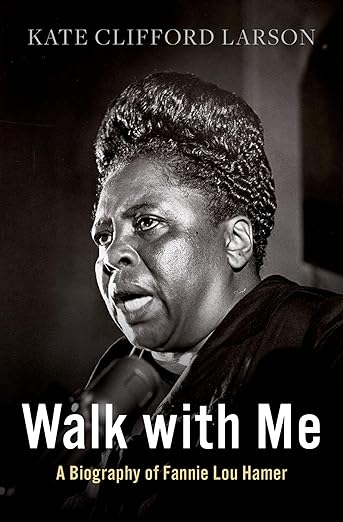
Walk With Me: A Biography of Fannie Lou Hamer by Kate Clifford Larson
Friday, february 6 through friday, february 20, 2026
Read by martha white
She was born the 20th child in a family that had lived in the Mississippi Delta for generations, first as enslaved people and then as sharecroppers. She left school at 12 to pick cotton, as those before her had done, in a world in which white supremacy was an unassailable citadel. She was subjected without her consent to an operation that deprived her of children. And she was denied the most basic of all rights in America―the right to cast a ballot―in a state in which Blacks constituted nearly half the population. And so Fannie Lou Hamer lifted up her voice.